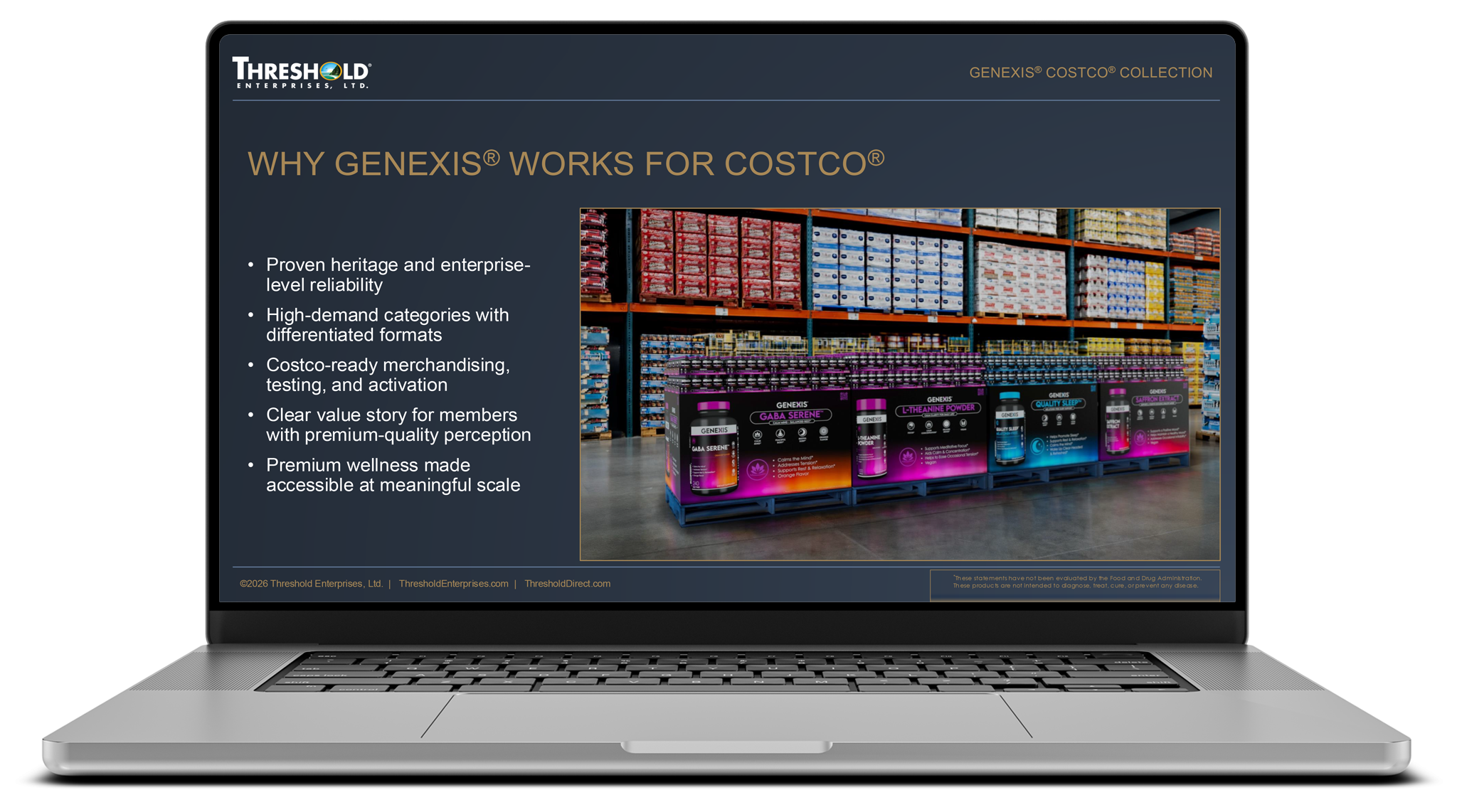
Costco® Retail Growth Strategy
Building the Opportunity Around the Retailer
I developed a retail growth proposal for introducing a four-product Genexis wellness collection to Costco, leading the project from research and opportunity analysis through product strategy, positioning, merchandising, presentation development and buyer sell-in.
Rather than approach the opportunity as a traditional product pitch, I built the proposal around Costco's shopper and business model—identifying high-demand wellness need states, analyzing category momentum and whitespace, and determining where Genexis could bring something incremental to the existing assortment.
The resulting strategy centered on four products across emotional wellness and sleep, each selected to address a distinct consumer need while working together as a cohesive wellness system. The goal wasn't simply to find products Costco could carry. It was to build an assortment with a reason to exist.
Start With the Shopper
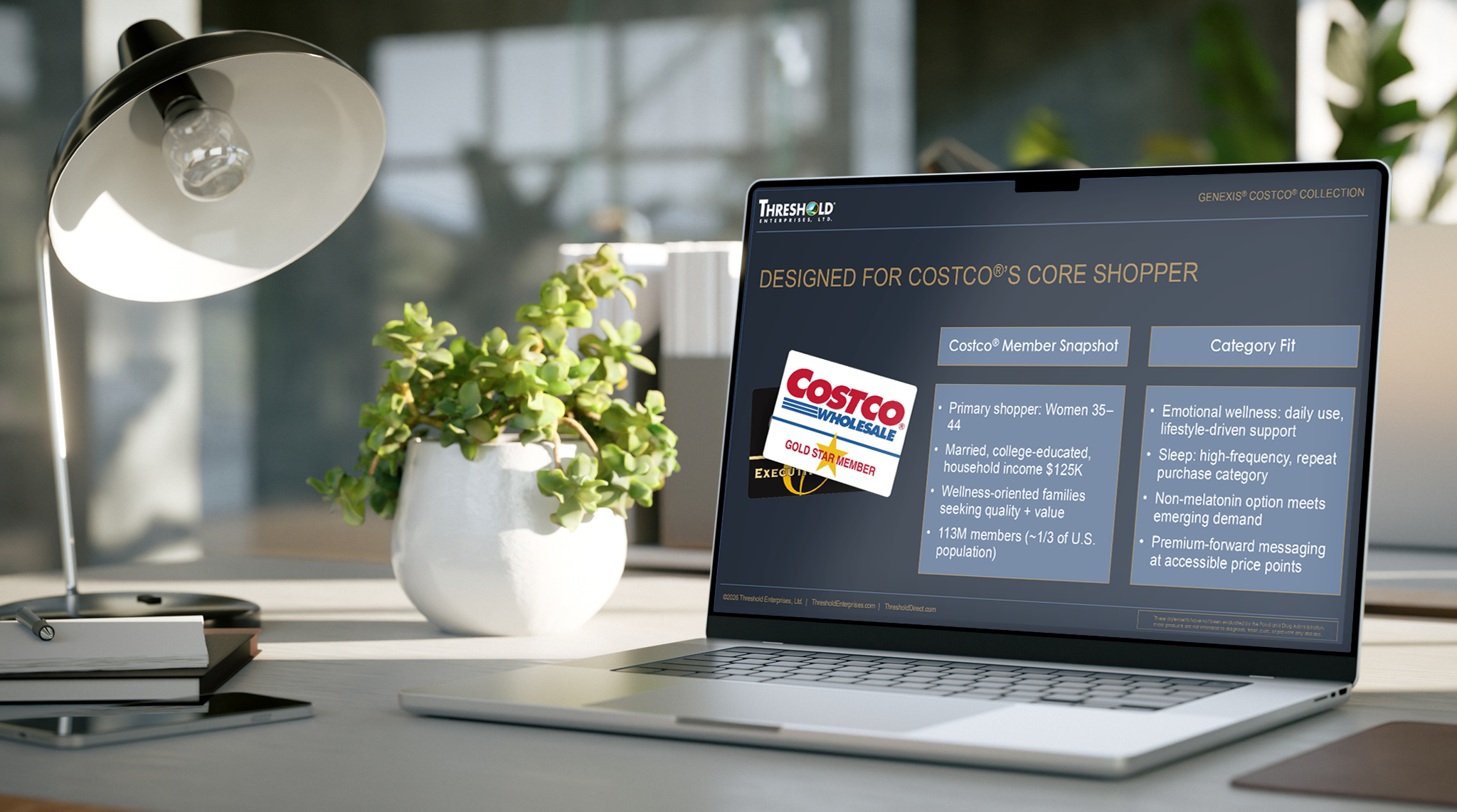
The strategy began with understanding who we were building the proposal for.
Costco's core shopper aligned well with the opportunity: wellness-oriented households looking for quality, efficacy and strong member value. From there, I focused the assortment around two increasingly relevant need-state territories—emotional wellness and sleep—and looked for areas where consumer demand, category momentum and Costco's existing assortment created an opening.
That changed the question from “Which Genexis products should we pitch?” to:
“Where can Genexis create meaningful incremental value for the Costco member?”
That distinction drove the rest of the proposal.

Finding the Whitespace
The research showed that some of the strongest opportunities weren't necessarily the largest established categories. In several cases, consumer behavior and category momentum were moving faster than retail assortment.
L-Theanine represented an established and growing ingredient with very limited penetration in powder format, creating an opportunity for a flexible Costco-sized mix-in positioned around calm focus and everyday use.
Saffron presented a different opportunity: rapid category growth combined with relatively limited distribution, creating the potential to establish an early position within an emerging wellness ingredient.
GABA addressed established consumer interest across calm, mood and sleep, while sleep-category data showed movement toward non-melatonin alternatives.
Rather than treating those trends independently, I used them to build the logic for the assortment.
Building an Assortment, Not Four Products
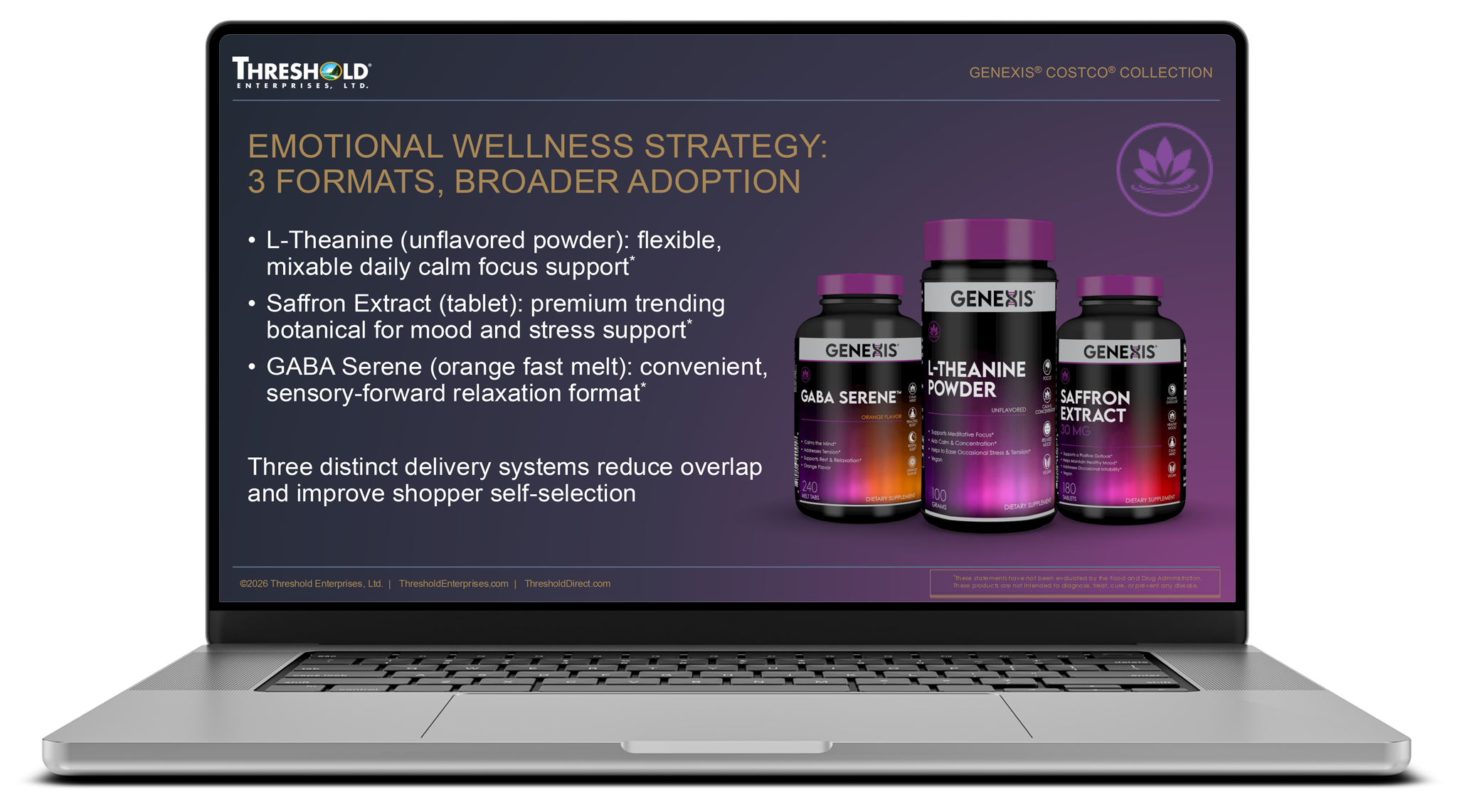
The four proposed products were selected to occupy distinct roles:
L-Theanine Powder — Daytime Calm + Focus
Saffron Extract — Positive Mood
GABA Serene — Nighttime Unwind
Quality Sleep — Non-Melatonin Sleep Support
Together, they created a broader emotional wellness and sleep system without asking four products to solve the same problem.
That distinction mattered commercially. Each item needed a clear reason for being in the assortment, an understandable consumer use occasion and the potential to create incremental purchasing rather than simply shifting demand between similar products.
Product selection, positioning, format and value architecture were therefore developed as parts of the same retail strategy.

Designing for the Warehouse
The recommendation couldn't stop at product and positioning. It also had to work in Costco's physical environment.
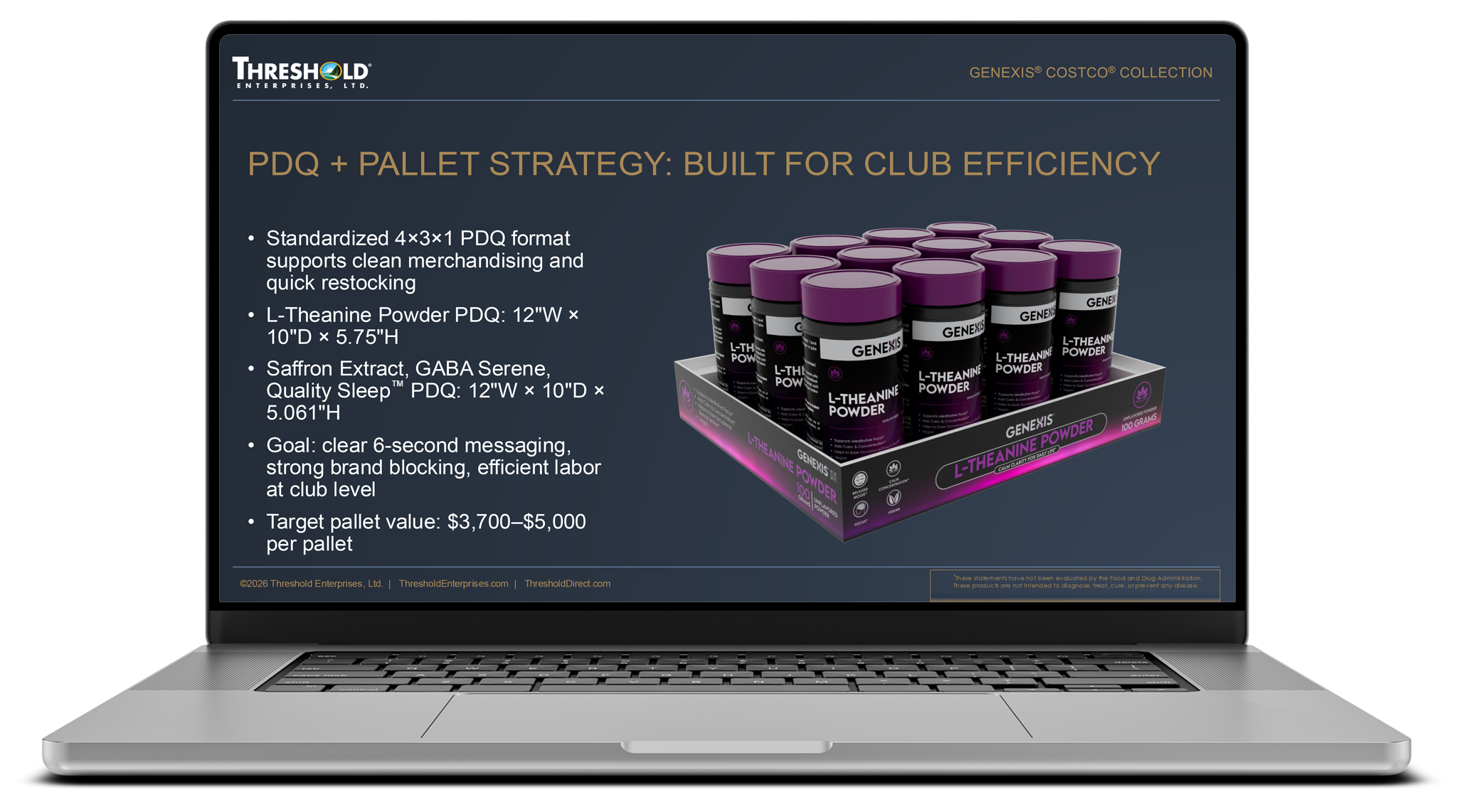
I developed the retail architecture around fast shopper comprehension, strong brand blocking and efficient warehouse execution. The proposed system included standardized PDQ configurations and pallet planning designed to make the assortment easy to merchandise, replenish and understand at a glance.
Messaging was intentionally simplified for approximately six-second communication, while pack architecture and value were considered through the Costco lens—including serving count, cost-per-use and the expectations of a club-format shopper.
The objective was to make the strategy work not only in a buyer presentation, but eventually on the warehouse floor.
Turning Strategy Into a Buyer Case
I researched, developed and designed the complete proposal, bringing shopper insight, category data, product strategy, positioning and retail execution together into a single buyer story.
The presentation was deliberately structured to answer a sequence of questions:
Why this consumer opportunity?
Why these need states?
Why these four products?
Why Genexis and Threshold?
Why Costco?
And how could the assortment be executed and supported?
Sell-in planning extended into the practical requirements of bringing the concept to market, including product specifications, pricing strategy, samples, promotional support, Temporary Price Discounts, Multi-Vendor Mailer participation, endcap opportunities and supporting marketing.
The result was not simply a presentation of available products. It was a retailer-specific business case built around the intersection of consumer demand, category opportunity, product strategy and execution.